Key Results
- Instant warning: one button sent a flashing "GAS, GAS, GAS" alert to every computer on our base network
- Built for the real threat: created when Iraqi missiles were being fired at forward bases in the opening days of Operation Iraqi Freedom
- Reached people who could not see or hear: Marines in tents, officers on laptops and the crew in the server container
- Coding under fire: I wrote code while wearing a gas mask during the attacks
Summary
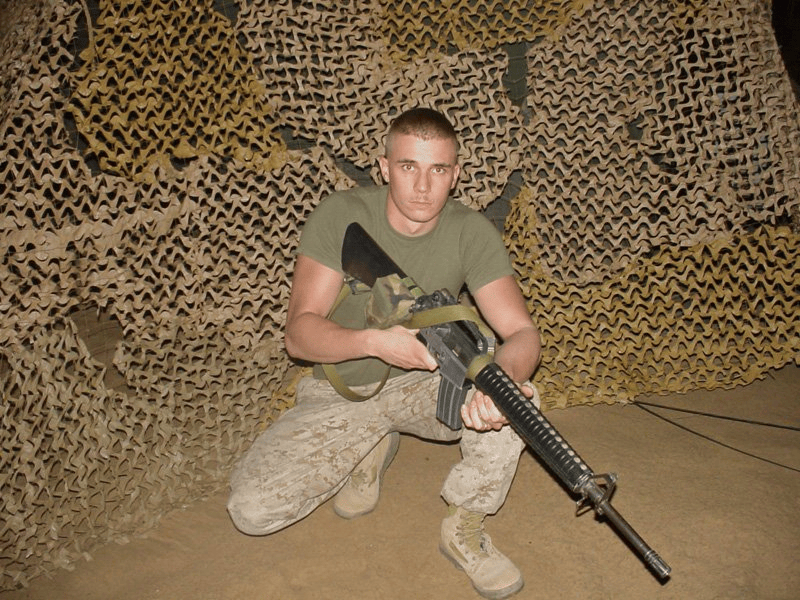
In the early days of Operation Iraqi Freedom, Iraqi missiles were being fired at the forward operating bases, including ours at Camp Fox. Every Marine knew the drill. When missiles were inbound, someone yelled "gas, gas, gas," gave the arm signal, and everyone who could see or hear it put on their gas mask and MOPP gear.
The weak spot was obvious to me. A warning you have to see or hear does not reach a Marine heads down at a keyboard in a tent, an officer focused on a laptop, or someone working inside a server container. So I built a utility script that worked at the network level on the local network at Camp Fox, our temporary base. When the alarm went up, whoever was on watch could press one button, and every computer on the network lit up with a big flashing alert in Marine Corps red and yellow that said "GAS, GAS, GAS."
This is the story of the smallest piece of software I have ever been proud of, and why I still think about it every time we build an alert, a notification or an emergency message for a client.
About the Mission
The Operation Iraqi Freedom build up
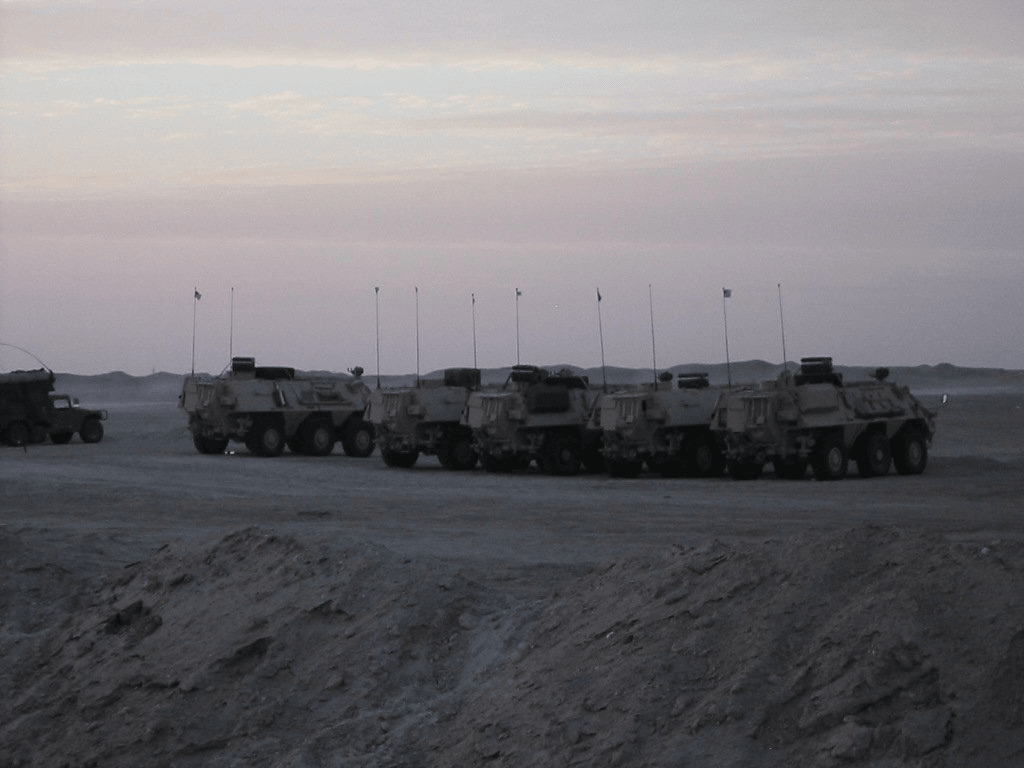
By early 2003, the Marine Corps had moved a huge force into position for the war in Iraq. My command, the 2nd Force Service Support Group, deployed into theater as the Marine Logistics Command. The Marine Corps History Division account of combat service support in OIF explains that while 1st FSSG was the retail level logistics organization, "2d FSSG or MLC was the wholesale level logistics organization," brokering ammunition, fuel and water and pushing it out across the battlefield. An oral history from a 2nd FSSG staff officer describes the work of that build up as offloading Maritime Pre-positioned Forces ships and "basically creating the iron mountain" of supplies before the push north. We lived and worked on temporary camps in the desert. Mine was Camp Fox; the same oral history notes the Marine Logistics Command was "Based at Camp Fox."
Missiles inbound
The air war began on the night of March 19 to 20, 2003, and Iraq answered with missiles aimed at the staging camps. CNN reported on March 20 that two Iraqi missiles landed near Camp Commando and that Patriot batteries shot down two more. The camp "was quickly ordered into bunkers and told to put on gas masks, followed by the announcement 'missiles inbound.'" The Marine Corps history U.S. Marines in Iraq, 2003: Basrah, Baghdad and Beyond records that as Marines sat jammed in the bunkers with their masks on, "the word was passed to go to the highest NBC protective state (MOPP IV)." The American Forces Press Service reported the same day that it was unclear whether the missiles carried chemical or biological agents, "but forces in the area took precautions."
We called them Scuds, like nearly everyone did. Early reports used the same word, though the Pentagon later said many were other types such as the Al Samoud. To a Marine reaching for a mask, the name did not matter. What mattered was getting the warning in time.
What MOPP means
MOPP stands for Mission Oriented Protective Posture. The Department of Defense defines it as "a flexible system of protection against chemical, biological, radiological, and nuclear contamination" in which personnel wear the protective clothing and equipment the threat calls for. The levels run from MOPP 0 to MOPP 4. The Army infantry doctrine supplement sums up the top level in three words: "All protection worn." That means the suit, boots, gloves and the gas mask with its hood. Now picture typing in it.
About the 2nd Force Service Support Group
The 2nd Force Service Support Group was the logistics backbone of II Marine Expeditionary Force, headquartered at Camp Lejeune, North Carolina. Its lineage goes back to 1944, and according to the official 2nd Marine Logistics Group history the unit relocated to Camp Lejeune in September 1945 and was "Redesignated 30 June 1978 as 2d Force Service Support Group." In Operation Iraqi Freedom, the 2d FSSG formed the Marine Logistics Command. The Marine Corps History Division account of combat service support in OIF explains that "2d FSSG or MLC was the wholesale level logistics organization," responsible for brokering sustainment such as ammunition, fuel and water and pushing it out across the battlefield. In 2005 the Marine Corps renamed every FSSG a Marine Logistics Group, and the command I was stationed with, and whose in garrison website I helped build and maintain, became today's 2nd Marine Logistics Group.
The Challenge
A warning that only works if you see or hear it
Standard protocol was right for open ground: yell "gas, gas, gas" and give the arm signal. But a modern deployed headquarters is full of people looking at screens. Generators hum, headsets are on, and tent walls block sight lines. Someone working inside a closed server container might not hear a thing.
Seconds count
A chemical alarm is useless if it arrives late. Every second between the first shout and the last Marine getting the word was a second of exposure we could not afford.
Someone was always on
Our work ran 24 hours a day, seven days a week, so there was always a Marine on watch at a computer. That gave me something to build on: a person with the right permissions who could trigger a warning for everyone else.
Our Solution
Step 1: A network level utility
I wrote a utility script that worked at the network level on the temporary base's local area network. It did not depend on anyone opening an app or checking a message. It pushed straight to every computer on the network.
Step 2: One button, the right permissions
Whoever was on watch, on a computer with the right permissions, could press a single button. That fired the script. Limiting who could trigger it kept the alert trustworthy, so when it went off, everyone knew it was real.
Step 3: Impossible to miss
The script popped up a big flashing alert on every screen, in Marine Corps red and yellow, with the words "GAS, GAS, GAS." It reached anyone at a computer: Marines in tents, officers on laptops, the people in the server container. It did not replace the shout and the arm signal. It backed them up, reaching people who could not see or hear the warning.
Step 4: Keep working, masked up
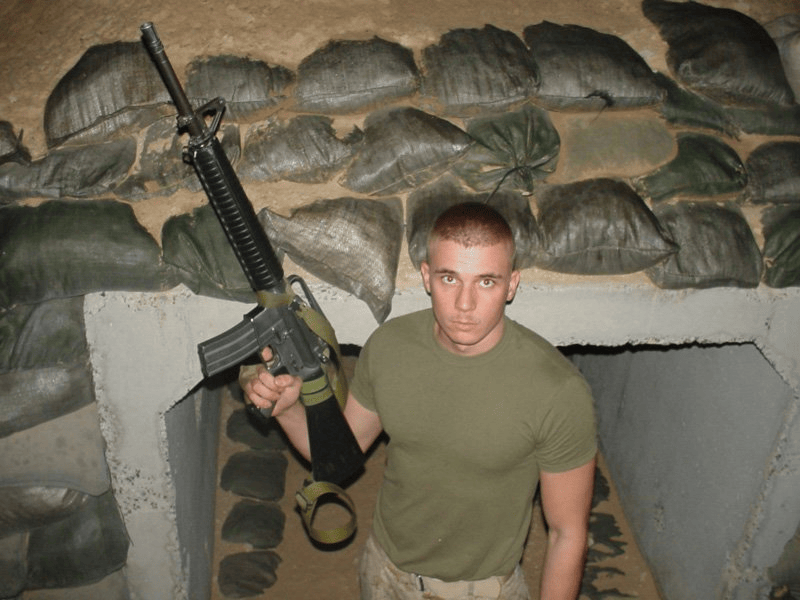
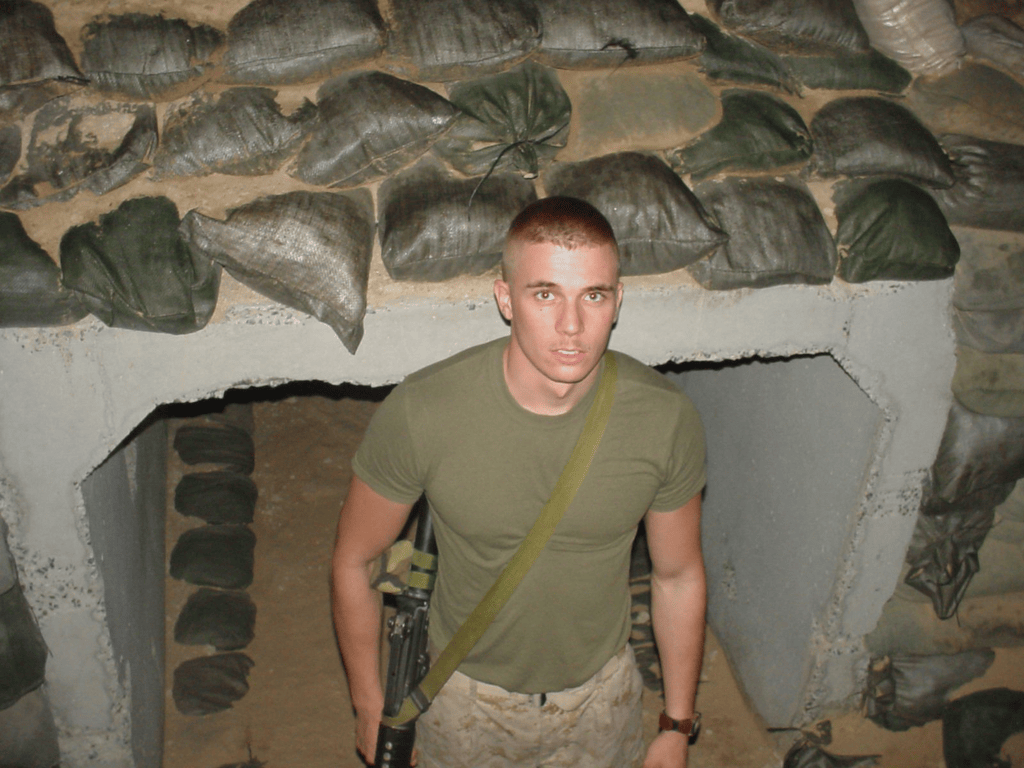
During the attacks I wrote code while wearing a gas mask. The work did not stop because missiles were in the air, and the systems we supported still had to run.
The Technical Picture
- Scope: the temporary base's local area network in the desert
- Trigger: a single button on a watch computer with the right permissions
- Delivery: a network level script that pushed a full screen, flashing alert to every connected computer at once
- Design: Marine Corps red and yellow with the words "GAS, GAS, GAS," built to be seen in a glance
- Audience: Marines in tents, officers on laptops and the crew in the server container
- Operations: a 24/7 watch, so someone was always ready to fire the alert
Results
When the alarm went up, the warning reached every computer on our network at the same moment, including the people who could not see or hear the shout. It was a small script with one job, and it did that job when it mattered most.
What It Taught Me
Meet people where their attention already is. If your audience is looking at a screen, put the message on the screen. That is true for an emergency alert and for a website announcement bar, a push notification in a mobile app or an email.
Speed and clarity beat features. Big, flashing, three words. The best emergency alerts and notifications say one thing fast.
Trust comes from control. Only the right people could fire the alert, so nobody ever wondered if it was real. We design publishing permissions and notification systems the same way today.
Back up the human process, do not replace it. The shout and the arm signal stayed. Technology filled the gaps. Good digital tools work alongside the people and processes an organization already trusts.
Build for the worst day. I wrote code in a gas mask. Calm, reliable engineering under pressure is the standard I still hold every project to.
Related Military Case Studies
- Small Unit Logistics: A ColdFusion to .NET Migration for the Marine Corps
- Armory Management System for Camp Lejeune: Custom Asset Tracking
- Tent Management: A Personnel Tracking System for Deployed Marines
- 2nd FSSG: Building the In Garrison Website at Camp Lejeune
- Marine Corps 4067 Computer Programmer: Learning Ada and Databases at 29 Palms
- Gas, Gas, Gas: The Network Emergency Alert I Built During Operation Iraqi Freedom
In My Words
Writing code in a gas mask at Camp Fox while missiles were inbound, I knew a flashing GAS, GAS, GAS alert on every screen could reach a Marine who never heard the shout, and that is the smallest piece of software I have ever been proud of.
Brian Messenlehner
Project leadership by Brian Messenlehner.
Need Alerts, Notifications or a Mission Critical App?
From emergency alerts on a desert network to push notifications in mobile apps and announcement systems on high traffic websites, I build messaging that reaches people fast. Tell me what you need to get in front of your audience.
Brief Us on Your Mission
Want to talk about a website, mobile app, migration or AI project? Fill out the Mission Brief and a specialist will follow up to schedule a call and put together a free quote.