Key Results
- Locate any Marine: find anyone in camp by knowing their tent
- Built in the field: tents created and numbered on screen in the middle of the desert
- One to many: every tent linked to the Marines assigned to it
- Live berthing picture: who sleeps where, updated as Marines arrive and move
Summary
When Marines deploy, whole cities of tents go up in the sand almost overnight. On deployments I built a personnel tracking system for those tent cities. I call it Tent Management here. Its main purpose was simple and critical: always be able to locate any Marine when needed, by knowing which tent they were assigned to.
System admins could create and number tents on screen, right there in the middle of the desert, and assign Marines to each one. The result was an accountability system that matched the real camp, so a leader could look up a Marine and walk straight to them.
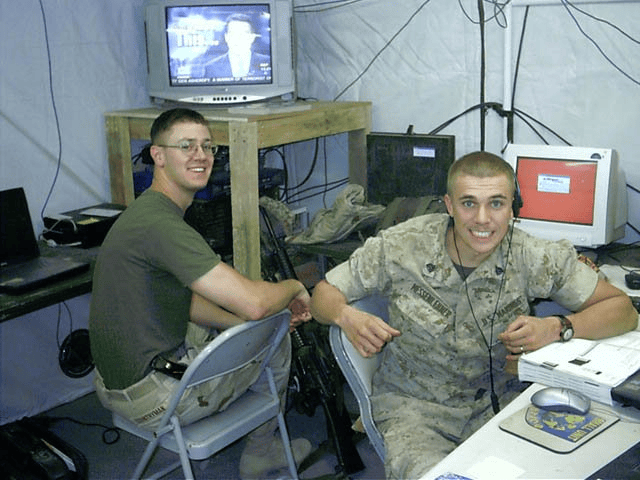
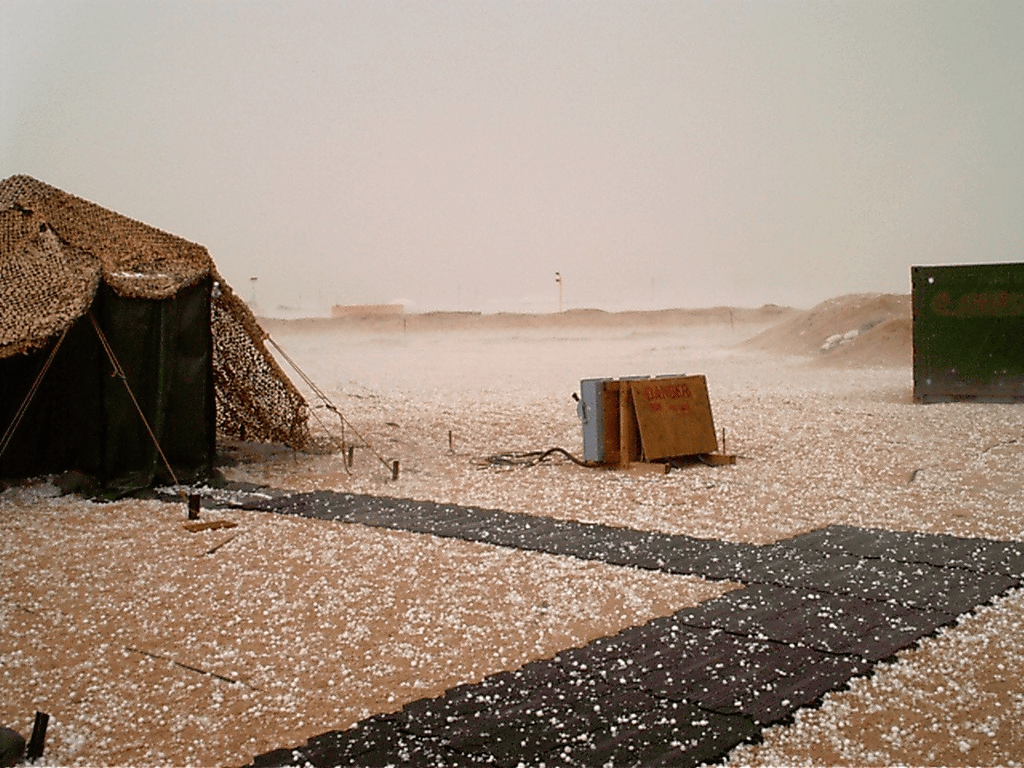
About the Mission
Before and during Operation Iraqi Freedom, Marine units staged in desert camps. The Marine Corps History Division's account of the 1st Marine Division in Iraq, 2003 describes Marines at Camp Commando turning a corner of the compound into a camp "complete with its own Guardian Angel post, sandbagged bunkers, and living tents," with MEF, MEG, FSSG and supporting Marines "bivouacked in the camp." A Washington Post report from Camp Commando in March 2003 described "rows of tents and portable toilets" across the sand.
Logistics in that theater depended on knowing where people and things were. The 2nd Force Service Support Group, whose in garrison website I helped build back at Camp Lejeune, led the Marine Logistics Command in the war.
About the 2nd Force Service Support Group
The 2nd Force Service Support Group was the logistics backbone of II Marine Expeditionary Force, headquartered at Camp Lejeune, North Carolina. Its lineage goes back to 1944, and according to the official 2nd Marine Logistics Group history the unit relocated to Camp Lejeune in September 1945 and was "Redesignated 30 June 1978 as 2d Force Service Support Group." In Operation Iraqi Freedom, the 2d FSSG formed the Marine Logistics Command. The Marine Corps History Division account of combat service support in OIF explains that "2d FSSG or MLC was the wholesale level logistics organization," responsible for brokering sustainment such as ammunition, fuel and water and pushing it out across the battlefield. In 2005 the Marine Corps renamed every FSSG a Marine Logistics Group, and the command I was stationed with, and whose in garrison website I helped build and maintain, became today's 2nd Marine Logistics Group.
Tent cities during Operation Iraqi Freedom
The camps where Tent Management ran were built for one of the largest logistics efforts in Marine Corps history. In early 2003, the 2nd FSSG deployed for the war in Iraq as the Marine Logistics Command. An oral history from a 2nd FSSG staff officer describes the work as offloading Maritime Pre-positioned Forces ships and "basically creating the iron mountain" of supplies before I MEF pushed north. The same officer recalls that his responsibilities included "supervising daily accountability, personnel casualty reporting and reception of individual augments, which was a big issue." That is personnel accountability, the exact problem tent tracking helps solve.
The camps were not quiet. When the war started on March 20, 2003, Iraqi missiles were fired at the staging bases, and the Marine Corps history U.S. Marines in Iraq, 2003 describes Marines jammed in bunkers with gas masks on. When everyone scatters to a bunker, knowing who sleeps in which tent is how you count heads afterward. You can read how we warned every computer on the network in Gas, Gas, Gas. Our camp was Camp Fox, the base where, according to an oral history from a 2nd FSSG staff officer, the Marine Logistics Command was based during the major combat phase of OIF.
Accountability in a crowded theater
Accountability was one of the hardest problems of the buildup. The GAO's preliminary review of logistics in Operation Iraqi Freedom looked at "policies, procedures, and processes in place to maintain accountability and control over materiel as it moved to, within, and from the theater of operations." If equipment was hard to track, people moving between crowded camps were a challenge too.
The camps themselves carried real risk. Stars and Stripes reported in 2003 that several fires had "quickly burned tents to the ground at staging camps," and quoted a firefighting officer warning that "one spark could spell disaster." In an emergency like that, knowing exactly who lived in which tent is not paperwork. It is how you account for every Marine.
The 2nd FSSG in Operation Iraqi Freedom
The 2nd Force Service Support Group deployed in December 2002, ahead of the war in Iraq, according to the 2nd Marine Logistics Group history, and went on to form the Marine Logistics Command for the invasion. Its Marines were among the "MEF, MEG, FSSG, and supporting Marines" living in the tent camps.
The Challenge
Camps that change every day
Tent cities grow fast. Marines arrive, move between tents, go out on missions and return. A paper roster pinned to a tent pole is out of date by lunch.
Finding one Marine among thousands
When a leader needs a specific Marine, for a mission, a muster, a message from home or an emergency, "somewhere in camp" is not good enough. You need to know exactly where that Marine sleeps.
Working in the field
Whatever we built had to be set up and managed on site. The camp layout did not exist until the tents went up, so the system had to let admins build it as the camp was built.
Our Solution: A Personnel Tracking and Accountability System
Build the camp on screen
System admins could create tents on screen and give each one a number as the camp went up. The digital camp matched the physical one, tent for tent.
One to many: tents to Marines
The data model was a one to many relationship. Each tent held many Marines, and each Marine was assigned to one tent. That simple structure answered both of the questions that matter: who is in this tent, and where is this Marine.
Berthing management
Because every assignment lived in one place, berthing management became straightforward. Admins could see which tents were filled, move Marines between tents, and keep the record current as units arrived and departed.
Locate any Marine
The heart of the system was search. Look up a Marine, get their tent number, and go find them. That is the accountability that leaders needed in the field.
The Technical Picture
- Application type: custom web application with a relational database
- Core entities: tents (created and numbered by admins), Marines, assignments
- Relationship: tent to Marines one to many; each Marine assigned to one tent
- Users: system admins managing the camp; leaders locating Marines
- Stack: my Marine Corps work used ColdFusion, Classic ASP, ASP.NET, C#, SQL Server and Oracle
Results
Tent Management gave leaders a live picture of who lived where, so any Marine could be located when needed. Admins could stand up the camp on screen as fast as it went up on the ground, and the record stayed current as Marines moved.
It sits alongside my other Marine Corps work: the Small Unit Logistics (SUL) migration, the Camp Lejeune Armory Management System, and the 2nd FSSG in garrison website.
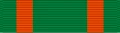
The Navy and Marine Corps Achievement Medal
On 1 October 2003 I was awarded the Navy and Marine Corps Achievement Medal for my service as G6 Programmer, Marine Logistics Command, US Marine Corps Forces, Central Command, in support of Operation Iraqi Freedom from 14 February 2003 to 31 May 2003. The citation credits me with developing the MLC Tents program, which enhanced administrative control by providing immediate access to information on MLC personnel, and with being instrumental in planning and creating the MLC homepage, which it called crucial to the MLC mission. It also notes proficiency and professionalism above my peers.
What It Taught Me
Simple data models save the day. One tent, many Marines. The cleanest structure was also the most useful, and that is still how we design custom post types and directories in WordPress.
Let admins build the world. Giving admins the power to create and number tents themselves meant the system worked in any camp. Today we build admin tools that let clients manage their own locations, rosters and content without calling a developer.
Search is the feature. The whole point was finding a person fast. In modern web applications and mobile apps, great search and clear records are what users remember.
Accountability matters most when things move fast. The same principle drives the member directories, event check ins and location tracking we build into web and app development projects now.
Frequently Asked Questions
What is a personnel tracking system?
A personnel tracking system records where people are assigned so they can be found and accounted for. In Tent Management, each Marine was assigned to a tent, so finding the tent meant finding the Marine.
Why use a one to many data model for berthing?
Because that is how berthing works. One tent holds many Marines, and each Marine sleeps in one tent. Matching the database to the real world keeps the data simple and the answers fast.
Who managed the system in the field?
System admins. They created and numbered tents on screen as the camp went up and assigned Marines to them, so the system worked in any camp without a developer on call.
Where else does this kind of accountability system apply?
Anywhere people move between locations: campuses and dormitories, event check ins, volunteer and staff rosters, shelters and field operations. We build these as custom web applications, WordPress platforms and mobile apps.
What does accountability mean for deployed Marines?
It means leaders know where every Marine is. Knowing a Marine's tent let a leader find them quickly for a mission, a muster, a message or an emergency.
Related Military Case Studies
- Small Unit Logistics: A ColdFusion to .NET Migration for the Marine Corps
- Armory Management System for Camp Lejeune: Custom Asset Tracking
- Tent Management: A Personnel Tracking System for Deployed Marines
- 2nd FSSG: Building the In Garrison Website at Camp Lejeune
- Marine Corps 4067 Computer Programmer: Learning Ada and Databases at 29 Palms
- Gas, Gas, Gas: The Network Emergency Alert I Built During Operation Iraqi Freedom
- The MLC Homepage: A Command Website on SIPRNet in Operation Iraqi Freedom
In My Words
When missiles sent everyone scrambling for bunkers, knowing that Tent Management could tell us exactly which tent every Marine slept in made that simple system feel like the most important code I had written.
Brian Messenlehner
Project leadership by Brian Messenlehner.
Need a Personnel Tracking System?
We build custom web applications and mobile apps that keep track of people, places and assets, from member directories to field operations. Tell us about your project.
Brief Us on Your Mission
Want to talk about a website, mobile app, migration or AI project? Fill out the Mission Brief and a specialist will follow up to schedule a call and put together a free quote.