WooCommerce is often described as a small business store plugin. That undersells it. Because it runs on WordPress, it inherits a mature content platform, a huge ecosystem and complete ownership of your data and code. I have led WooCommerce builds ranging from beach resort shops to a gourmet grocery chain, and the lessons are consistent: large stores succeed when the architecture is planned around the catalog and the operations behind it.
Start with the catalog, not the design
Before a single template is designed, we model the catalog. How many products and variations? Which attributes do shoppers filter by? Do prices or availability vary by location? Where does product data originate? The answers drive everything else.
For the Central Market build, a catalog of about 26,000 products across nine stores meant availability had to be handled per location, product data had to flow in automatically and search had to be fast across all of it. That shaped the data model, the import pipeline and the hosting long before design was finalized.
Use HPOS and keep the database lean
WooCommerce now stores orders in dedicated tables through High Performance Order Storage, which is the default for new stores. It is faster and scales far better than storing orders as posts. For existing stores we plan the migration to HPOS and verify that every extension is compatible.
Other habits that keep large stores fast:
- Use global attributes for filterable properties instead of custom per product attributes
- Avoid plugins that add queries to every product loop
- Clean up expired sessions, transients and old action logs on a schedule
- Index any custom meta that you query often
Imports and ERP integration
Large catalogs rarely live in WordPress first. Products come from an ERP, a PIM or a supplier feed. We build importers that run in the background with Action Scheduler, process in batches, update only what changed and log every run. Prices and stock can sync more often than full product data. Orders flow back to the ERP or fulfillment system through the REST API or webhooks.
Search and filtering
Default WordPress search is not built for tens of thousands of products. We pair WooCommerce with a dedicated search engine such as Elasticsearch, OpenSearch or a hosted service so shoppers get typo tolerance, relevance tuning and instant facets. Filter counts, price ranges and availability then come back in milliseconds instead of seconds.
A checkout that converts
Checkout is where revenue is won or lost. We use the block based Cart and Checkout, which are now the WooCommerce default, keep fields to the minimum, offer express payment methods where they make sense and test every gateway on staging with sandbox credentials. Address autocomplete, clear shipping costs early and guest checkout all reduce abandonment.
Performance under real traffic
Product and category pages can be page cached; cart, checkout and account pages cannot. That makes a persistent object cache essential. We size hosting for peak events like holiday sales, run load tests before them and keep a CDN in front of all static assets. Our performance service and hosting service cover this end to end.
Security and PCI scope
Use payment gateways that tokenize card data so your servers never touch raw card numbers. That greatly reduces your PCI scope. Add two factor authentication for staff accounts, limit shop manager roles and keep extensions updated through a tested process.
Taking the store mobile
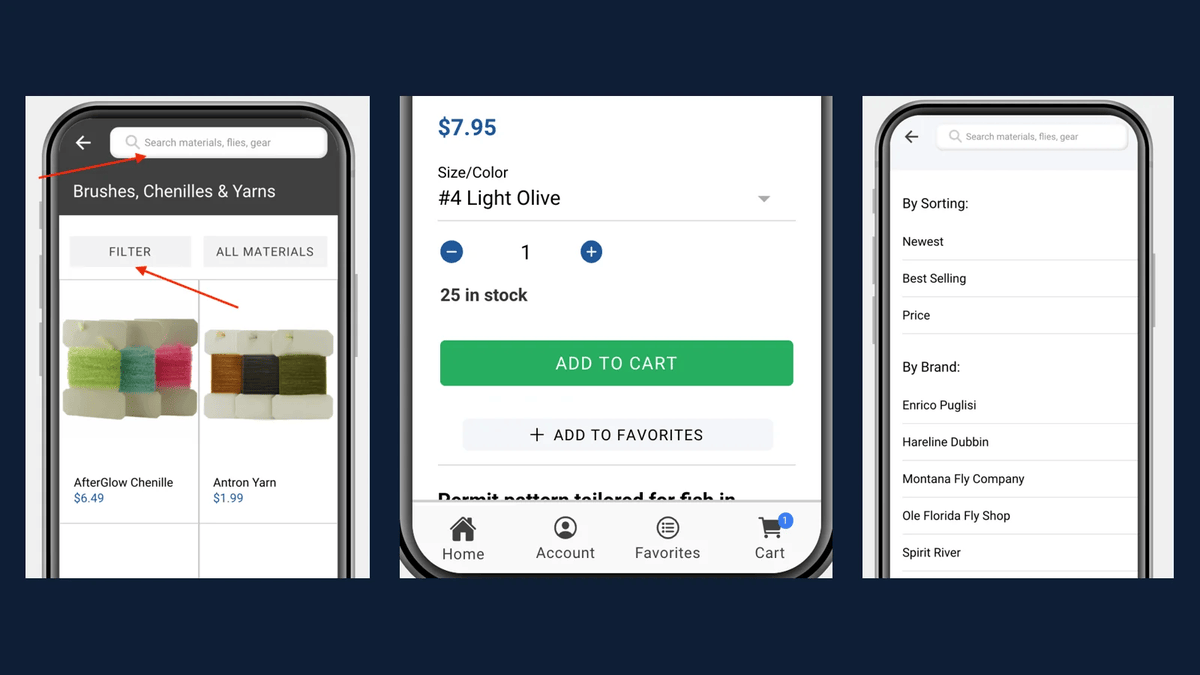
Once WooCommerce is solid, the same products, cart and account can power a native app. Our WooCommerce app guide explains how that works with AppPresser.
Plan for peak season early
Retail traffic is uneven. A seasonal business can do a large share of its yearly sales in a few weeks, and those weeks are the worst possible time to discover a bottleneck. We schedule a performance review well before peak season: load testing the checkout path, checking that the object cache hit rate is healthy, confirming payment gateway limits and freezing nonessential changes. We also prepare a plan for the day itself, with monitoring dashboards, clear owners and a rollback path for any release. For resort and boardwalk retailers like Jenkinson's, summer is everything, so readiness work happens in spring. Stores that rehearse their busiest day almost never have a bad one.
WooCommerce build checklist
- Catalog model with attributes, variations and location rules defined
- HPOS enabled and all extensions verified compatible
- Background importers with logging and delta updates
- Dedicated search engine for large catalogs
- Block based checkout with sandbox tested gateways
- Object cache, CDN and load testing before peak events
- Tokenized payments and two factor authentication for staff
Frequently asked questions
How many products can WooCommerce handle?
Far more than most people assume. Stores with tens of thousands of products run well with the right data model, search and hosting.
Should we choose WooCommerce or Shopify?
It depends on how much you need to own and customize. WooCommerce wins when commerce is tightly tied to content, custom workflows or integrations.
Can you migrate our existing store?
Yes. We move products, customers and order history and preserve URLs with redirects.
Planning a store? Explore our WooCommerce services.